Field Notes: 03
There’s been a change in the air: the cool, fresh, blustery mornings that September brings. And for me, September came with a change of scenery too - a move to a new, beautiful house where dear friend Ffion and I will be living until next June, whilst the family who live there are away. It’s on a steep hill with an “I can’t get over that view” overlooking Hebden, and access to Nutclough Woods from the doorstep.
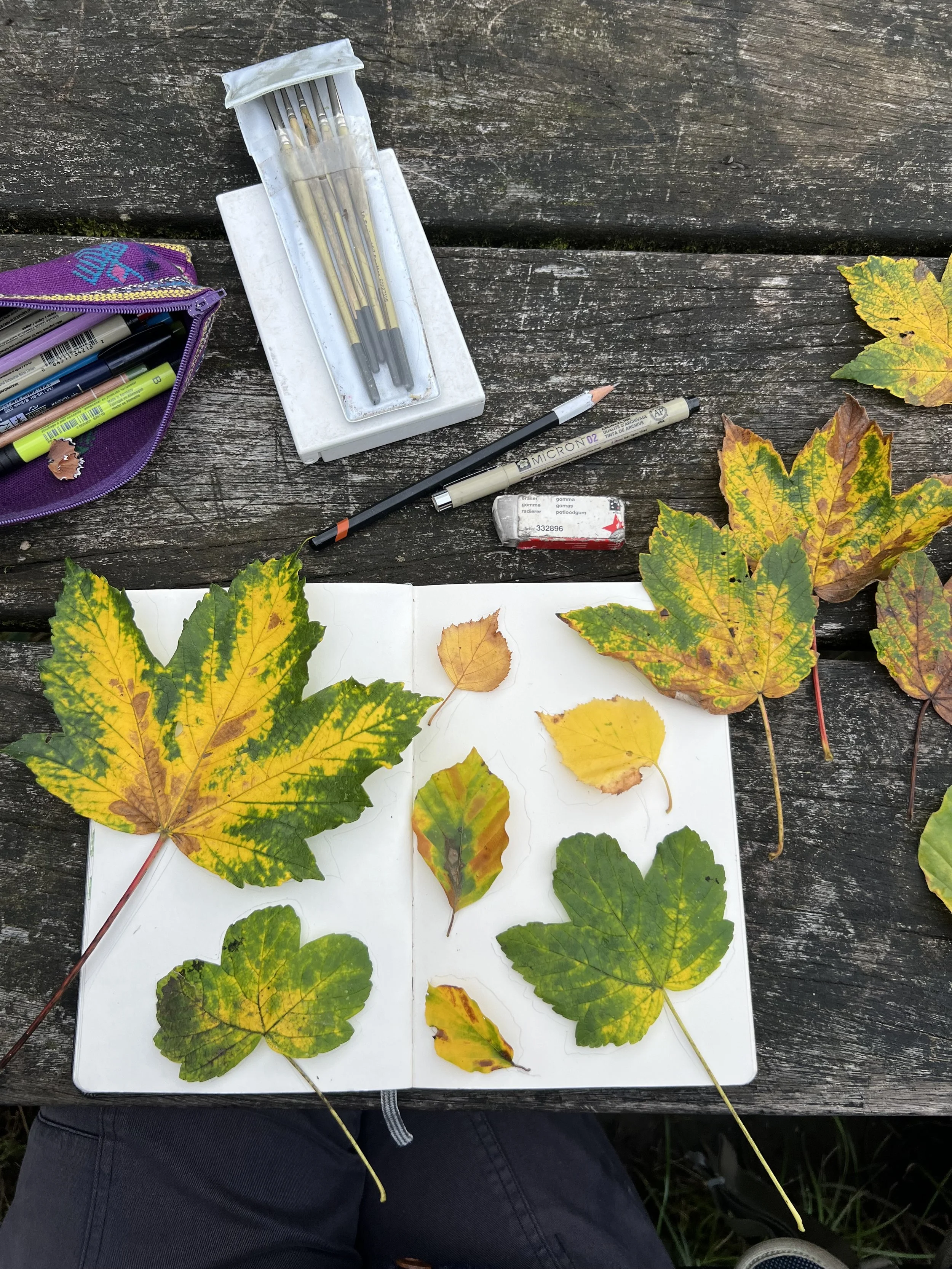
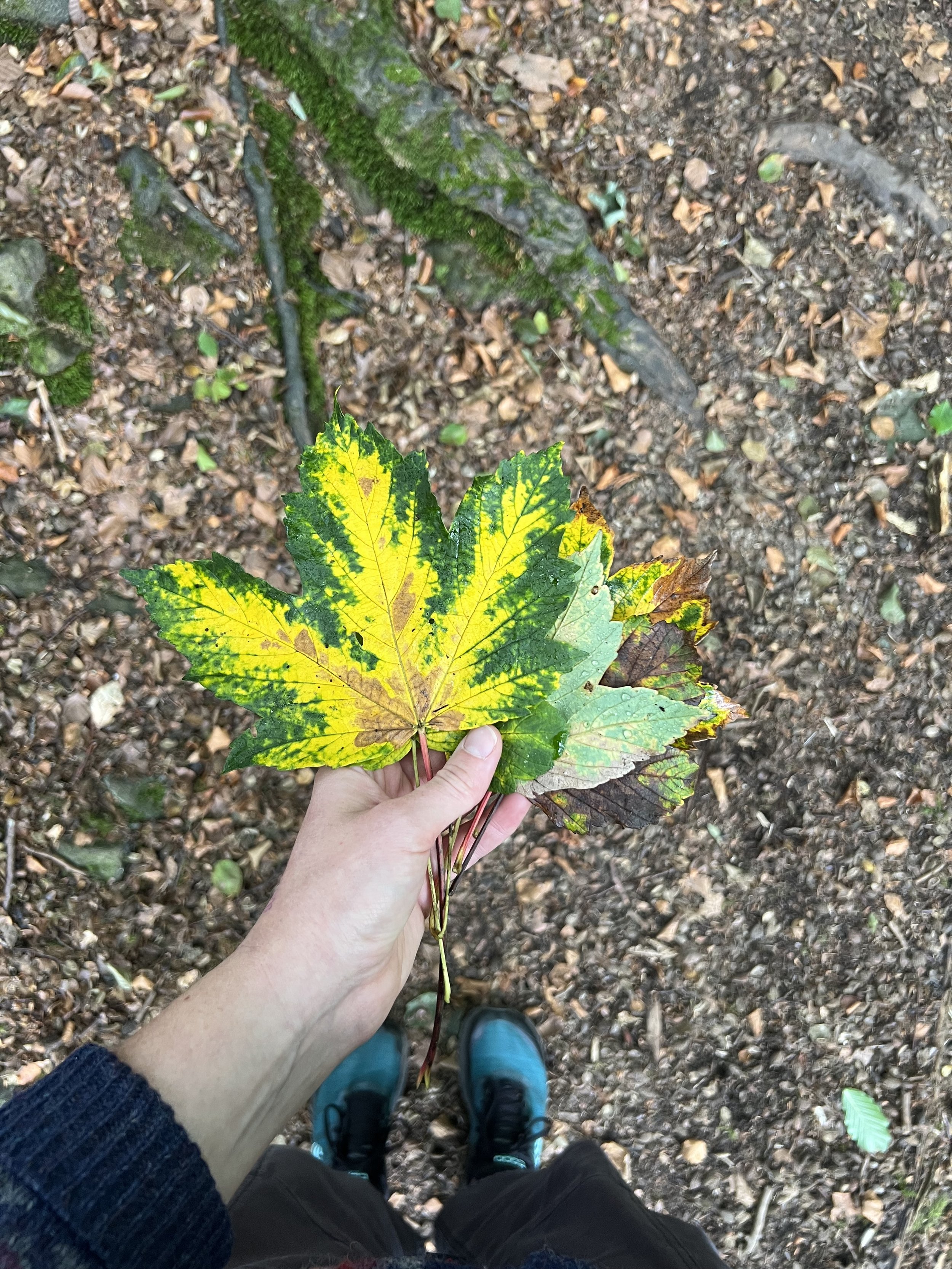
Being here, there, and everywhere between houses in August, and then finally moving in, I’ve been feeling unsettled, as I always do when I’m out of routine. So, this morning, to calm my racy nerves, I walked the long way round to the studio, through the woods and up past Stoodley View, then along and down the steps at Midgehole and back along the river path past Salem. I felt my chest breathe deeper as I sat for a second amongst the trees, and noticed my eyes clear as I focused on seeking the bright yellows of fallen leaves. I gathered a collection of those first fallen treasures, and clutched them tightly as I walked towards Northlight, knowing that painting them would help me slowly settle and re-find my rhythm.
The first falling leaves from Nutclough
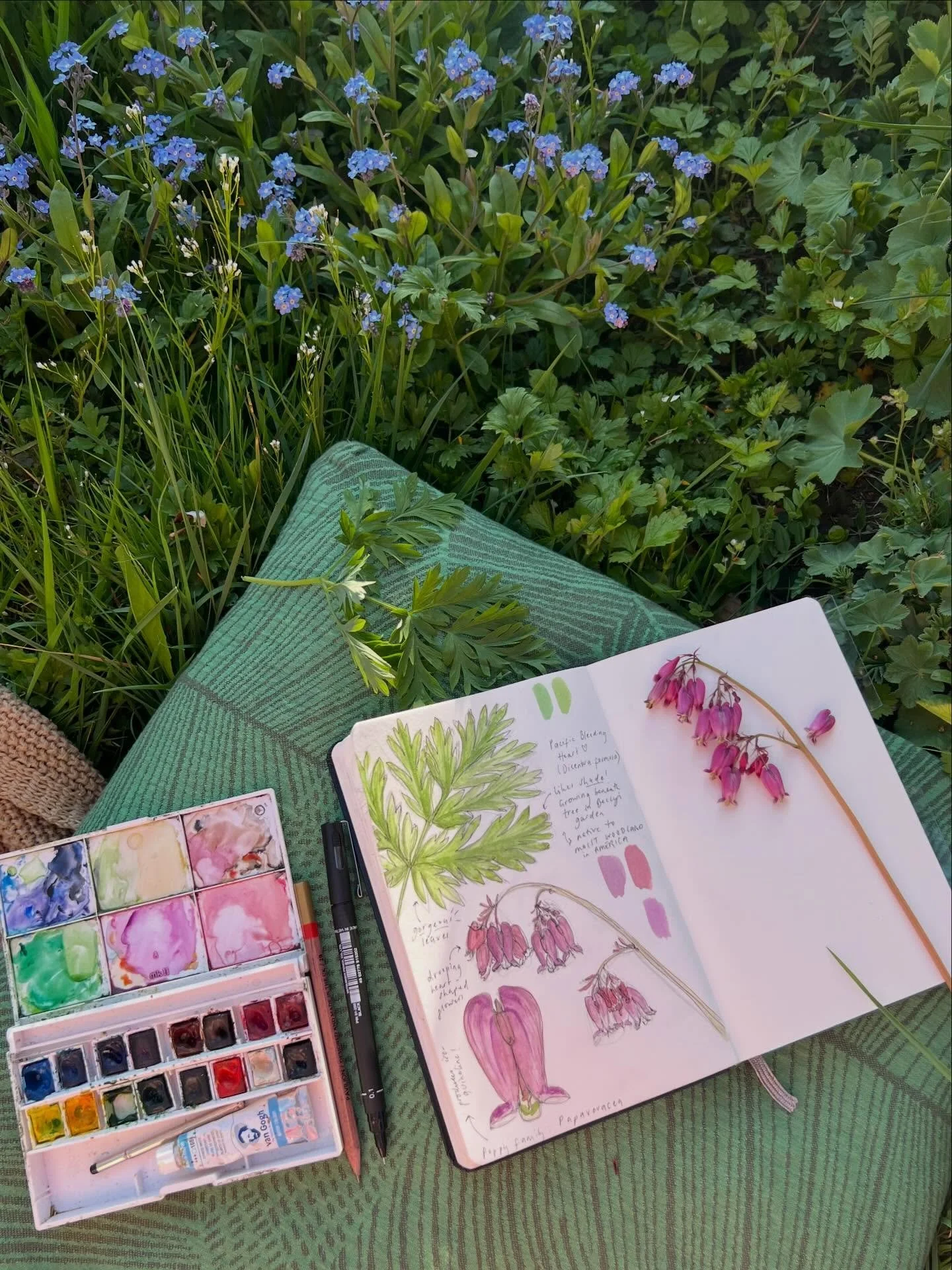
Here are those treasures for you to enjoy too, and the spread I created from my studies in my Nature Notebook.
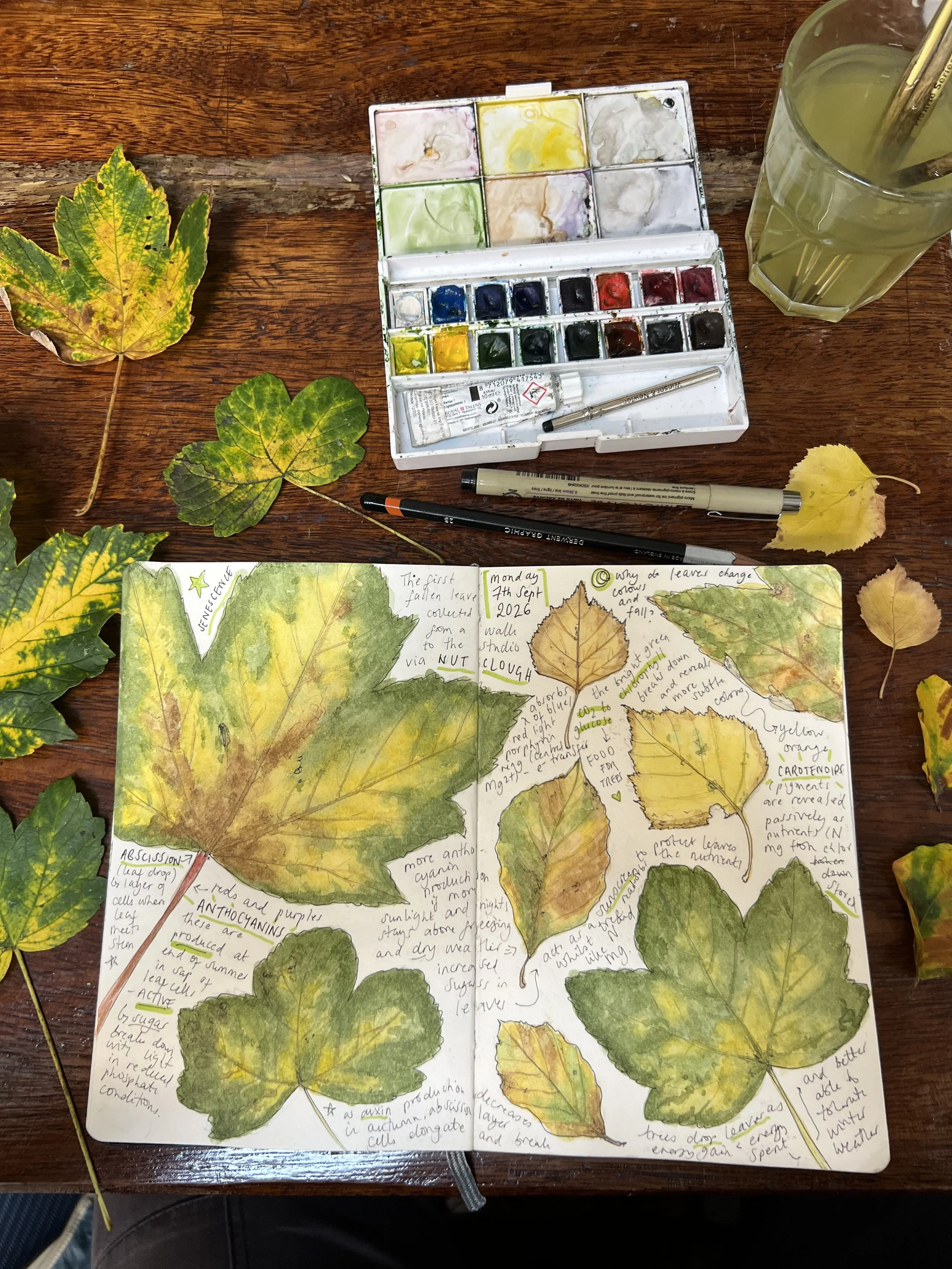
It made me wonder: what actually causes the leaves to change colour and fall in autumn? I remember learning this before when I read “The Hidden Life of Trees” by Peter Wohlleben, something about the different pigments… but I wanted to refresh my memory and share what I learned with you, too.
So, the bright green colour of leaves is due to chlorophyll, right? It has a chemical structure containing a porphyrin ring and a central magnesium ion (bear with me, I like this stuff). This absorbs energy corresponding to the wavelengths of blue and red from sunlight (whereas green is reflected, hence the colour of the leaves). Electron transfer reactions happen, leading to the conversion of carbon dioxide to glucose; sugars, ie., tree food!
As the seasons turn, shorter hours of sunlight and cooler temperatures signal the trees to stop making food and prepare themselves for winter. They start to break down chlorophyll and store its nutrients (like nitrogen and magnesium) for next year. As this happens, the hidden pigmentation of yellows and oranges begins to show, produced by compounds called carotenoids. These are always present but now revealed when the dominant chlorophyll is no longer there. This is what we are starting to see right now, with subtle yellows and pale oranges staining the fingers of Sycamores, Beeches, and Birches.
Following this, we will start to notice reds and pink colours later in autumn. These colours are from pigments called anthocyanins, which are actively produced, in contrast to the passive revealing of carotenoid yellows and oranges. Sugars in the sap of leaf cells break down in reduced phosphate conditions (like other nutrients, phosphate is withdrawn from the leaves to store for next year). Interestingly, anthocyanins act as a sunscreen to protect the leaves whilst the tree reabsorbs nutrients, making sure all those valuable resources are stored and saved for winter. So, this often happens more in nutrient-poor soils as trees can’t afford to lose any last morsel of goodness. Cool!
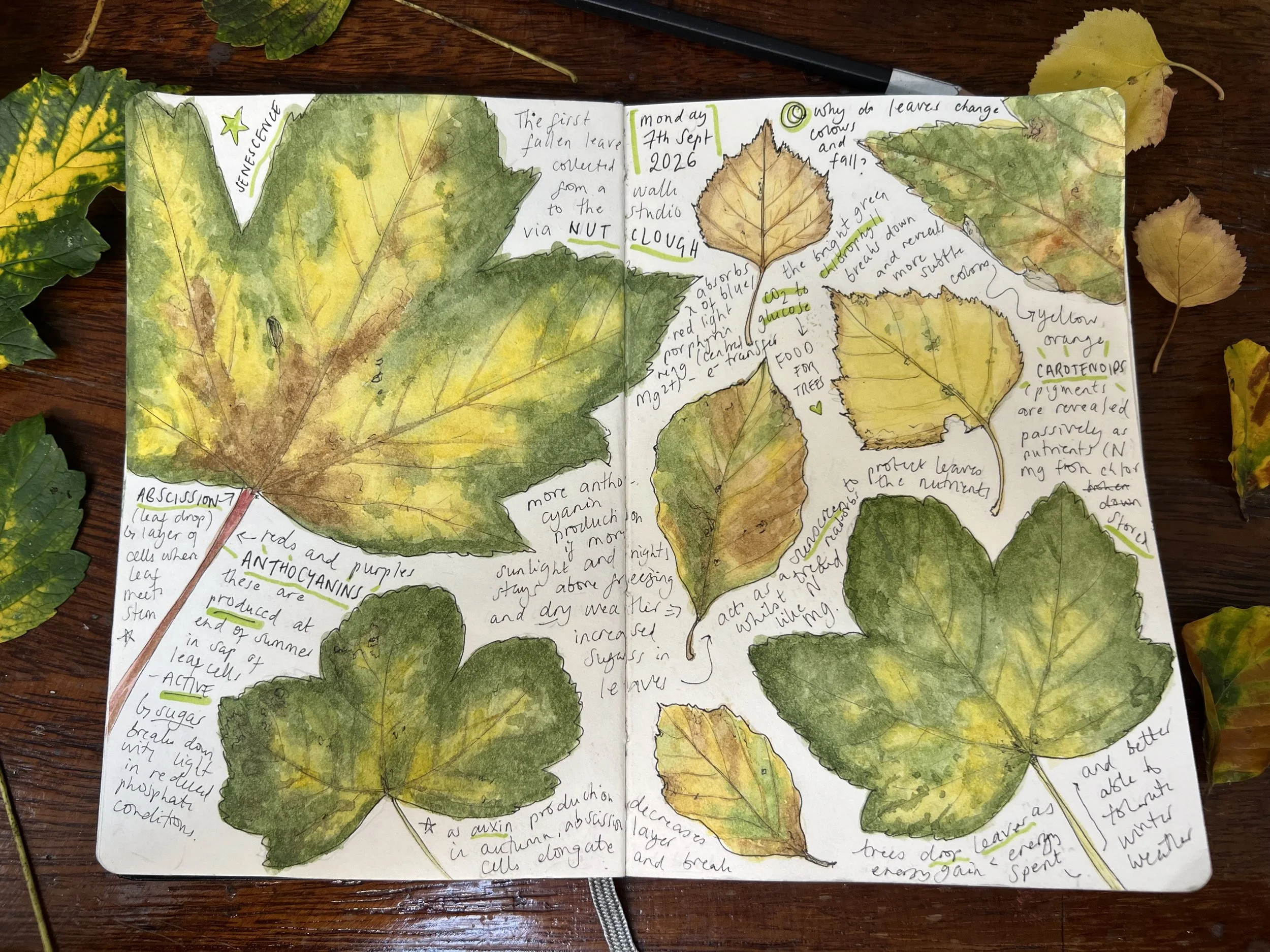
The first hints of autumn on the leaves.
In summary, the trees are going through a process called senescence, where they shut themselves down for winter and recycle nutrients. And in deciding when this process starts, there is a trade-off between making the most of the remaining sunlight and reabsorbing nutrients to ensure enough resources are stored for winter.
There are some wonderful metaphors in this, aren’t there? It makes me reflect on what we could learn from the trees. What must we make the most of as the seasons turn? How can we start to prepare for the approaching winter? How must we adapt our behaviours as our environment transforms? In any case, I will try to take a leaf out of the trees’ books, rather than resist change, be patient whilst I get used to it and, in the meantime, just make beautiful things!
Hey Nature Updates
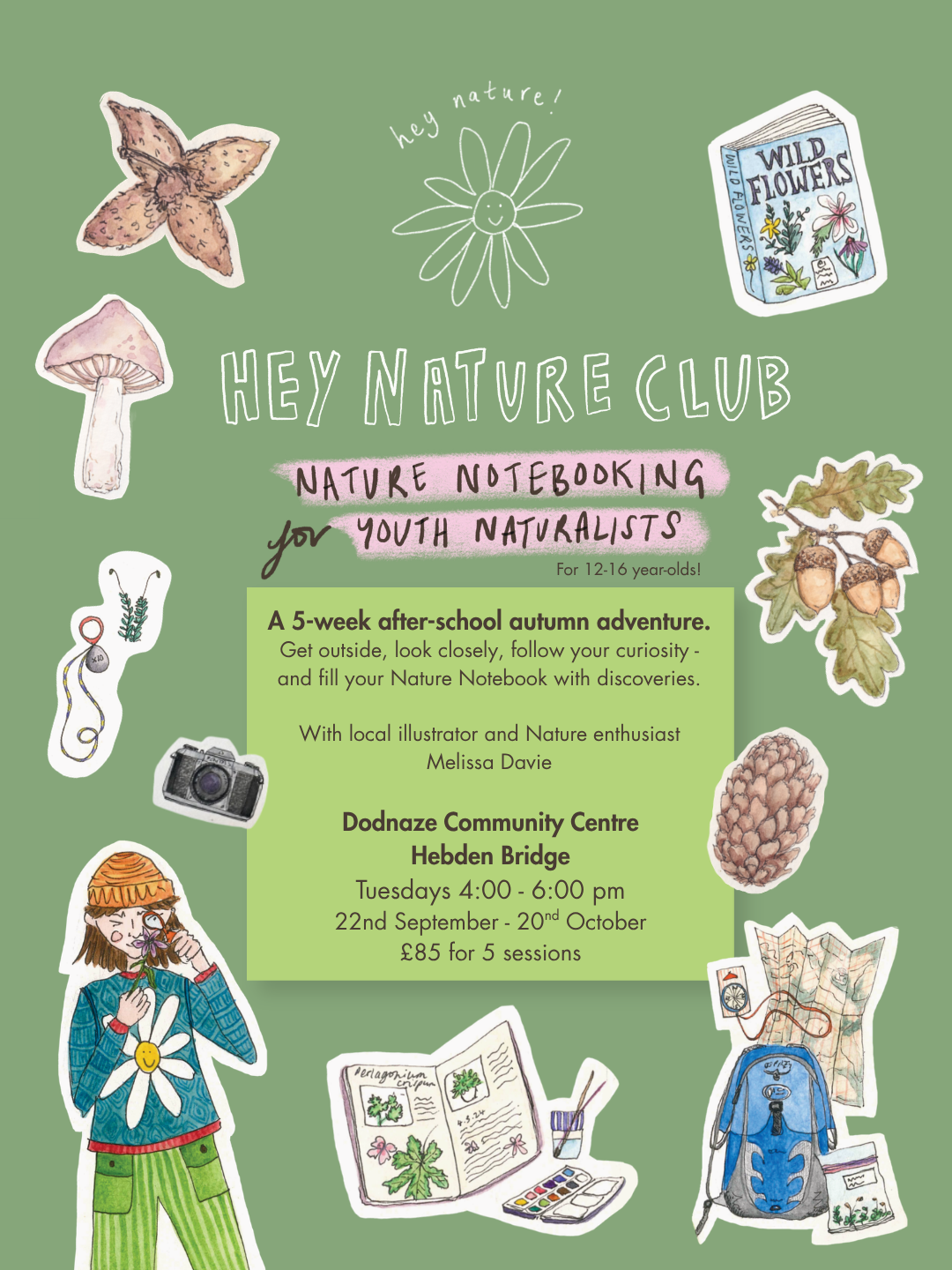
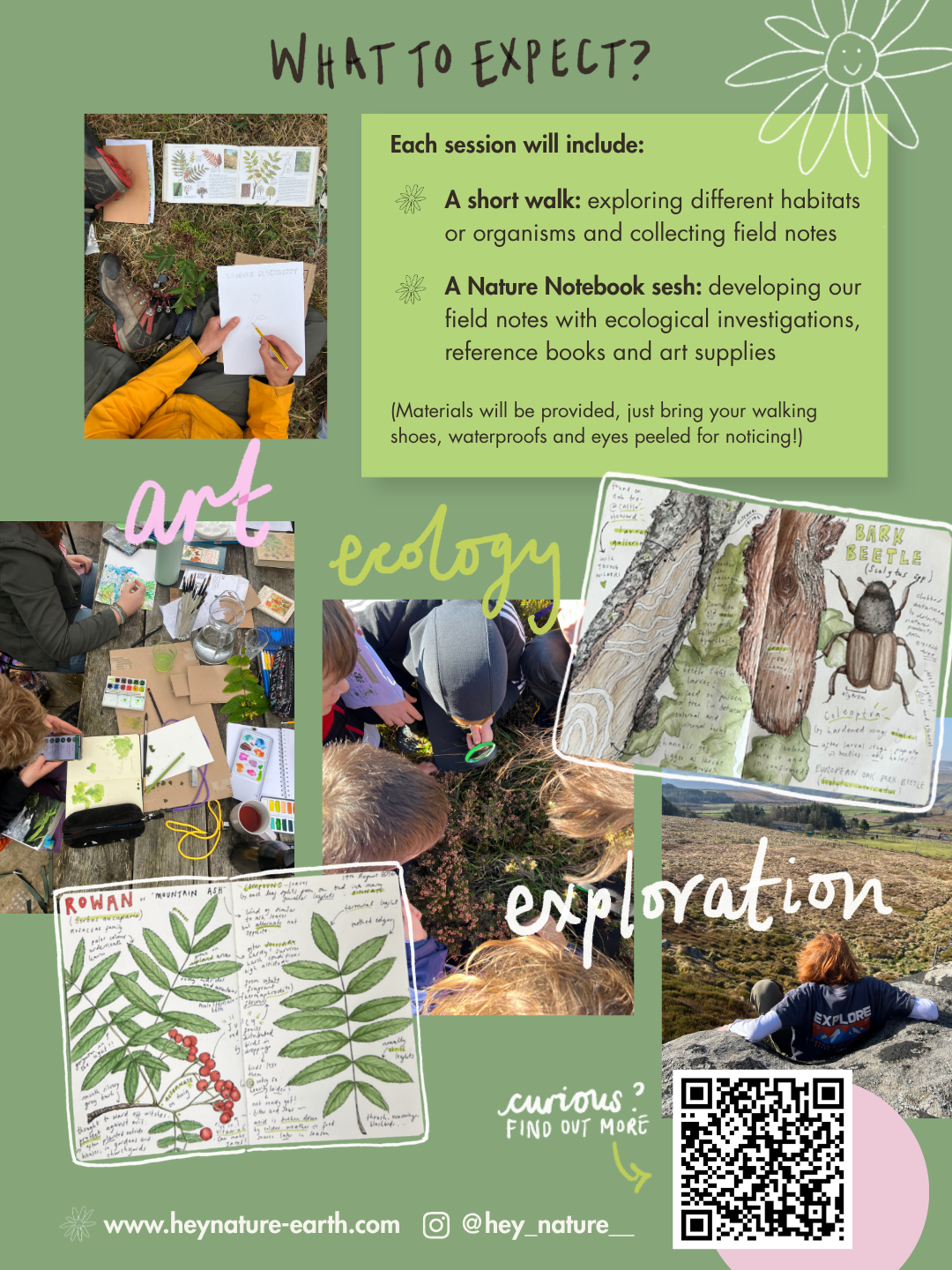
Great news to share with you: I was successful in my grant application for some extra resources and materials to develop Hey Nature, yey! So, I’ve been working hard to get everything sorted for the Hey Nature Club for Youth Naturalists, which will be happening at Dodnaze Community Centre, starting on 22nd September. Do you know any youth (12- to 16-year-olds) who would enjoy these workshops? Please share with them, and let’s get outside, explore, and make the most of autumnal evenings before the dark winter nights settle in! Check out the full details here.
Or, are you an adult who would enjoy workshops like this? I’m preparing some October half-term classes at Northlight, and hopefully monthly daytime sessions for adults throughout the year. Stay tuned if you’d like to come along and try it. Exploring in Nature, drawing, painting, noticing, wondering - it’s all the stuff that keeps me happy and well, and I hope it will do good things for you too!
In other news, I’ll be preparing for my first art market outside of Open Studios! You can find me alongside the lovely bunch at Mill Town Arts Autumn Fair on 10th and 11th October at Hebden Bridge Town Hall. Looking forward to it✨ Hope to see you there alongside a selection of new treasures… let’s see!